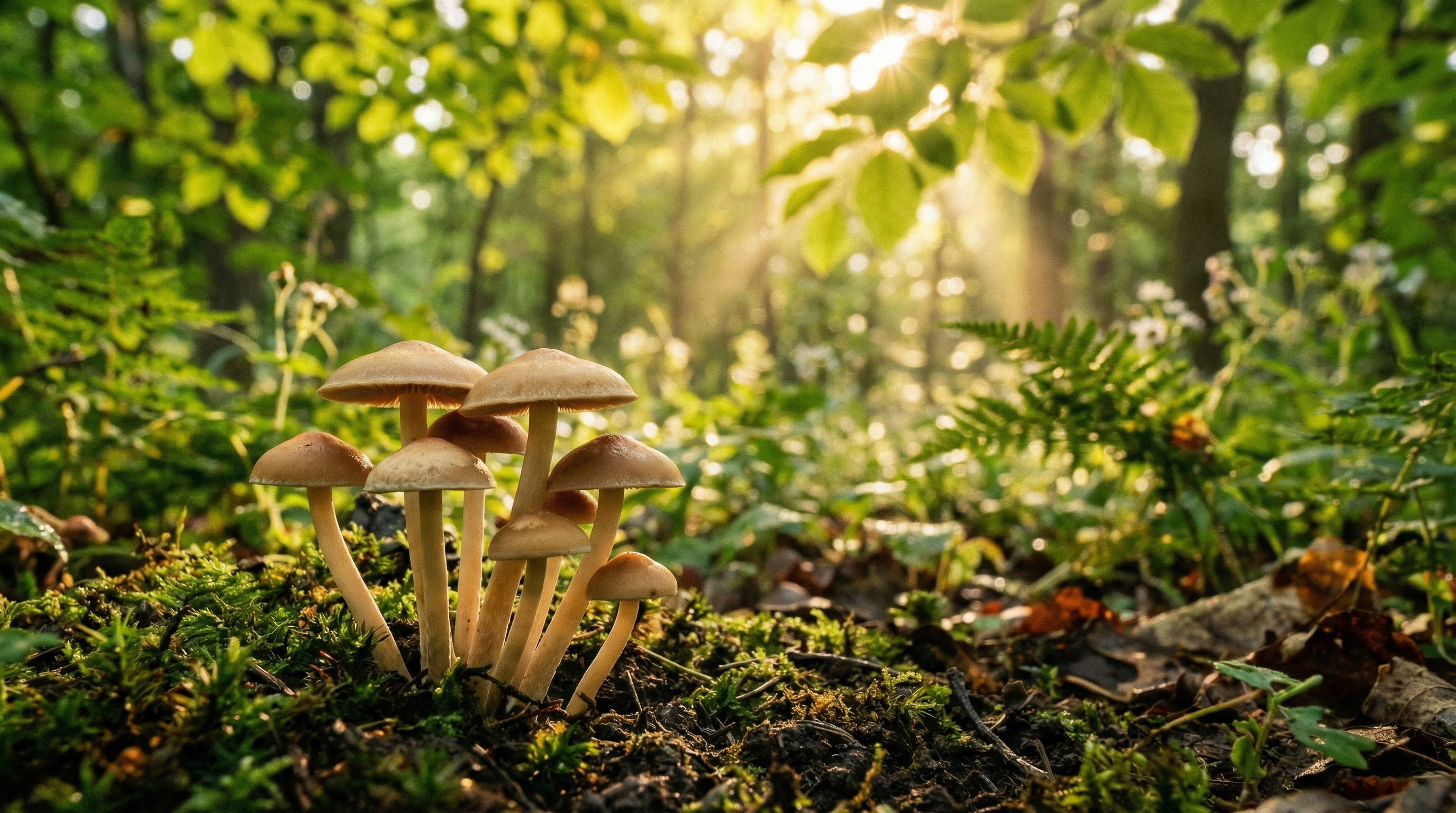
Reconnecting with Nature for Better Wellbeing
Seasonal transitions often pass quietly, yet they influence both natural environments and daily routines. As winter shifts toward spring, longer days and increasing sunlight gradually change landscapes. Plants begin new growth cycles, soil warms, and ecosystems become more active after months of relative dormancy.
These environmental changes can also shift our attention outward. The return of light and movement in the natural world often encourages people to spend more time outdoors and notice details that may have been overlooked during colder months.
This article explores how spring invites a renewed awareness of nature, the role fungi play within natural ecosystems, and how human curiosity about mushrooms continues to originate in the natural world.
The Subtle Changes of Spring
Spring brings gradual changes across natural environments. Increasing daylight and warmer temperatures influence plant growth, animal activity, and soil conditions. These seasonal shifts affect many organisms that respond to changes in light, temperature, and moisture.
Fungi are part of these cycles as well. Much of their activity occurs underground within networks of mycelium that interact with soil and plant roots. When environmental conditions become suitable, some fungi produce mushrooms as visible fruiting bodies.
Seeing mushrooms appear in forests, fields, or parks is often one of the more noticeable signs of these seasonal processes. Their presence reflects the broader ecological activity taking place beneath the surface.
Mushrooms and Human Curiosity
Encounters with mushrooms have long captured human attention. Throughout history, people foraging in forests and fields encountered fungi as part of their interaction with the natural environment. These encounters often inspired curiosity, leading different cultures to incorporate mushrooms into traditions, rituals, and systems of knowledge.
Today, that curiosity continues in a different form. Researchers study certain fungi to better understand the compounds they produce, including psilocybin. While the scientific tools have changed, the starting point remains the same: observation of organisms that exist within natural ecosystems.
If you're interested in learning more about how ancient cultures engaged with mushrooms and incorporated them into rituals and traditions, you can explore our article: Functional Mushrooms and the Ancient Practices That Shaped Human Perspective.
Nature as the Origin of Many Compounds
Many compounds explored in modern research originate in plants, fungi, and other natural organisms. Over time, scientists have learned that ecosystems contain a vast diversity of molecules produced through evolutionary processes.
Fungi are particularly notable in this regard. Certain species produce compounds that interact with biological systems in ways that have drawn scientific interest. Psilocybin, for example, is produced naturally by specific types of mushrooms and has become the subject of growing research into perception, cognition, and behavior.
These discoveries highlight an important perspective: nature often serves as the starting point for scientific exploration. Organisms evolving within ecosystems generate chemical diversity that researchers continue to study in laboratories and clinical settings. Recognizing this relationship between natural systems and scientific curiosity helps place modern research within a broader ecological context.
Experiencing Nature Rather Than Optimizing It
Modern discussions about health and wellbeing often frame nature in terms of productivity or optimization. Yet many people find that the value of nature lies not in what it provides, but in how it changes our perspective when we experience it directly.
Spending time outdoors can shift attention away from the routines and pressures of daily life. Walking through forests, sitting in a park, or simply noticing seasonal changes can encourage a quieter form of awareness, one that focuses on observation rather than outcomes.
Researchers studying environmental psychology have also explored how exposure to natural environments may influence mood, attention, and stress levels. These findings suggest that natural settings can help restore mental focus and reduce cognitive fatigue, reinforcing the long-standing intuition that people often feel different after spending time outside.
Importantly, this shift does not require elaborate plans or specific activities. Often it begins with something simple: slowing down enough to notice the environment around us.
Spring as a Moment to Step Outside Routine
Seasonal transitions often influence daily routines in subtle ways. As spring arrives and daylight increases, people naturally begin to spend more time outside and pay greater attention to their surroundings.
Several environmental changes contribute to this shift:
- Longer daylight hours, which extend the time available for outdoor activity and exposure to natural light
- Warmer temperatures, encouraging more time spent in parks, forests, and open spaces
- Visible seasonal changes, such as new plant growth, increased animal activity, and the appearance of fungi in natural environments
- Shifts in circadian rhythms, as increased light exposure influences sleep patterns and daily energy levels
These changes can create natural opportunities to step outside familiar routines and reconnect with the environment. Spending time outdoors during seasonal transitions often encourages a slower pace of observation, allowing people to notice the subtle details that shape natural ecosystems.
Finding Perspective in Nature
Nature has long shaped the environments in which humans observe, learn, and explore the world around them. Plants, fungi, and countless other organisms continue to inspire curiosity, offering insights into the complexity of natural systems.
Many of the compounds studied today originate within these ecosystems. Fungi, including the mushrooms explored in modern research, are part of biological processes that have been unfolding for millions of years.
AYA+ ultimately traces its origins to this same natural world. Yet the deeper value of nature lies not only in what it provides, but in the perspective it offers. As spring unfolds and landscapes begin to change, taking time to observe these shifts can reconnect us with the rhythms that shape the environments we live in.
Sometimes, simply stepping outside is enough to notice them.
References
- Nichols, D. E. Psychedelics.
- Carhart-Harris, R. L., et al. Neural correlates of the psychedelic state as determined by fMRI studies with psilocybin.
- Stamets, P. Mycelium Running: How Mushrooms Can Help Save the World.
- Ulrich, R. S. View through a window may influence recovery from surgery.
Kaplan, R., & Kaplan, S. The experience of nature: A psychological perspective.